
 Destinations · Canada
Big country, careful rules, and a work permit that rewards a plan
Canada gives you a recognised degree, part-time work during study and a post-graduation work permit of up to three years. Since 2024 the government has capped new study permits, raised the money you must show, and tightened which colleges lead to a work permit. It still works well, but only for students who check the rules before they pay.
The facts, as of November 2026
- Intakes
- September · January · May
- English
- The study permit itself has no English test. Universities usually ask for IELTS 6.5 overall, with 6.0 in each band, or an equivalent PTE or TOEFL score. Colleges often accept 6.0. Plan ahead, because the post-graduation work permit later needs CLB 7 for university graduates. Check per course.
- Tuition
- CAD 18,000 to 45,000 per yearEstimate as of November 2026. Statistics Canada’s 2025/26 averages are CAD 41,746 for international undergraduates and CAD 24,028 for international graduate students. College diplomas cost less, and medicine and MBA courses cost more.
- Living
- CAD 15,000 to 25,000 per yearEstimate as of November 2026. Toronto and Vancouver sit at the top of this range, and smaller cities sit nearer the bottom. The permit’s proof-of-funds figure is separate and fixed, see visa.
- Work during study
- Up to 24 hours a week off campus during regular terms, with no limit during scheduled breaks such as summer, provided your permit allows work (IRCC, as of November 2026).
- After you graduate
- A post-graduation work permit (PGWP) runs from eight months up to three years, depending on the length of the programme, and a master’s of under two years can still receive three years. Applicants since 1 November 2024 must prove English at CLB 7 for university graduates or CLB 5 for college graduates, and college graduates must also have studied an eligible field (IRCC, as of November 2026).
Study permit
- •Proof of funds, as of November 2026: CAD 23,448 for one person outside Quebec for applications made on or after 1 September 2026, plus first-year tuition and travel costs.
- •Fees: CAD 150 for the study permit and CAD 85 for biometrics (as of November 2026).
- •2026 cap: IRCC plans up to 408,000 permits, 155,000 of them for newly arriving students, with 309,670 application spaces for students who need a provincial or territorial attestation letter (PAL or TAL).
- •Master’s and doctoral students at public universities no longer need a PAL or TAL from 1 January 2026. Most bachelor’s and college applicants still do.
- •Your college or university must be a designated learning institution (DLI). Check the public list before you pay anything.
What studying here is like
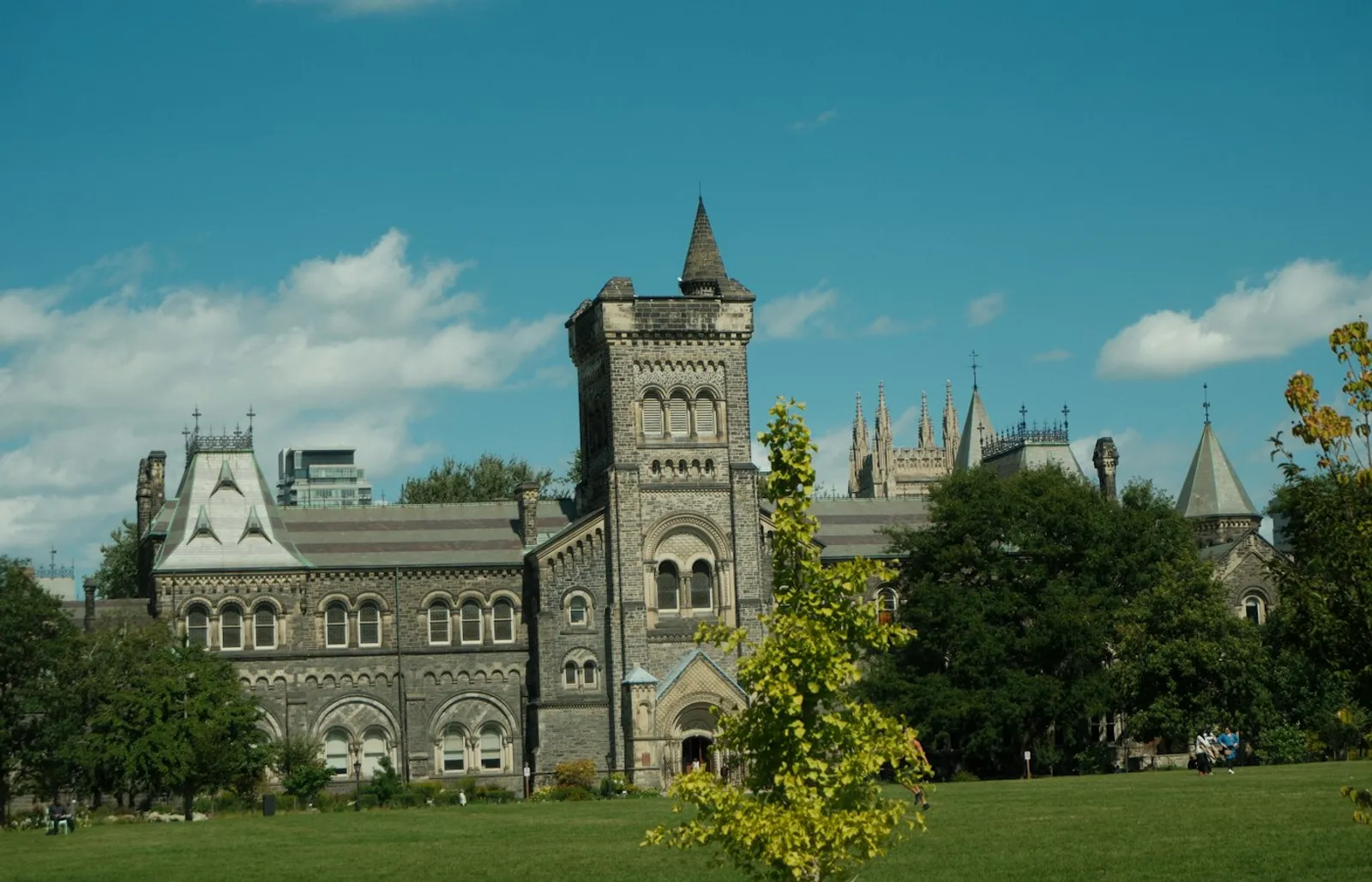
Canadian classrooms are practical and friendly. Professors use first names, grades come from projects and group work as much as from exams, and co-op placements put you inside a company for a paid term. Winters are long and very cold, but the campuses are built for it. Indian students are present in large numbers, from Brampton to Winnipeg. That is a comfort on the first day, and a reason to make the effort to mix with others later. Public universities are the safer choice, because the rules since 2024 have made many private colleges poor value.
How the journey works
Tell us where you want to study and we will check it against the cap rules first, because those rules decide what is possible. Shortlisting starts about 15 months ahead. Courses that begin in September 2027 open in autumn 2026, and many university deadlines fall between January and March. The documents are transcripts, an English test, a statement, references, and proof of funds that have been held in the family’s account for six months. The wait from application to offer is four to twelve weeks at universities. If you are applying for a bachelor’s degree or a college programme, your institution then requests your attestation letter. Master’s students at public universities skip this step. You file the study permit online and give biometrics. Processing has been taking from several weeks to a few months, so a student starting in September should file by May. After that come your port-of-entry letter, flights, and a Canadian bank account in the first week.
Money, honestly
Put the figures together and a master’s year costs roughly CAD 40,000 to 65,000 before flights. A bachelor’s degree can pass CAD 60,000 a year in Ontario. The CAD 23,448 is the government’s own estimate of one person’s living costs, and in Toronto or Vancouver rent alone can pass it. The figures leave out several costs: the tuition deposit, which is due before the permit decision, health insurance in provinces that do not cover students, winter clothing, and the weeks before part-time work starts. Twenty-four hours a week at minimum wage covers rent in a smaller city, but not tuition.
Our honest take
Choose Canada if you are going to a public university, ideally for a master’s, with money that has been held in your account for six months and a subject that leads to a work permit. Engineers, data specialists, nurses and business students with a clear field do well. Think twice if an agent is pushing you towards a private college with a quick admission, if your plan depends on part-time work to pay fees, or if you cannot wait for a slower and stricter permit process. Canada works for students who prepare carefully and start early.
Sources
- IRCC: Study permit
- IRCC: Proof of financial support for a study permit
- IRCC: Fee list
- IRCC notice: 2026 provincial and territorial allocations under the international student cap
- IRCC: Work off campus as an international student
- IRCC: Post-graduation work permit eligibility
- IRCC: About the post-graduation work permit
- Statistics Canada: Tuition in Canada, 2025/2026
Figures are estimates, checked November 2026. Rules and fees change; the official pages above are always right when we disagree.
Thinking about Canada?
Tell us your marks and your budget, and we will tell you honestly whether this country fits.